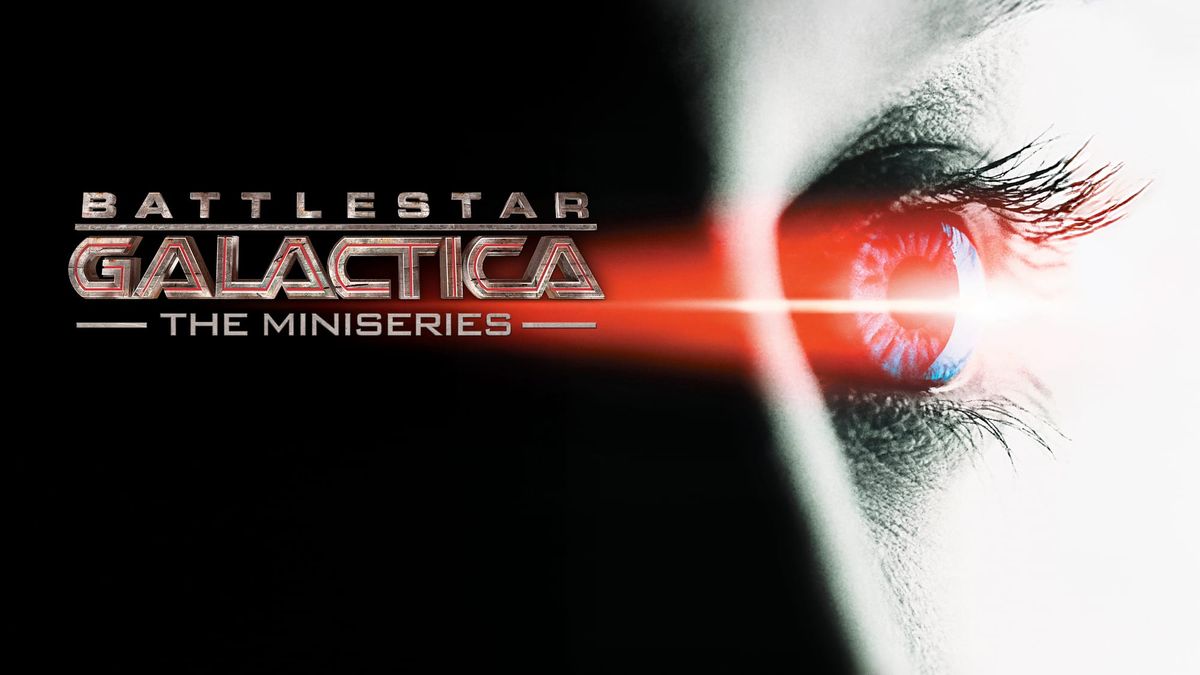
Praise the Lords of Kobol: Battlestar Galactica is back on streaming!
Battlestar Galactica was missing in action, but it's back! Celebrate the streaming return of the ragtag fleet and check out a preview of the book I'm writing about BSG

I’m guessing this quote has occasionally floated into your timeline too:
“There’s a reason you separate military and the police. One fights the enemies of the state, the other serves and protects the people. When the military becomes both, then the enemies of the state tend to become the people.”
This wasn’t a quote a high-ranking member of America’s armed forces gave to a journalist last week or last year. But given what’s been happening on the streets of American cities, it’s not difficult to imagine a worried military officer saying something like that to a leading publication. My own city, Chicago, was under siege last fall. Then it was Minneapolis’ turn.
In those cities and others, everyday people experienced the jolt of fear Laura Roslin must have felt when she saw, at the door of her improvised classroom on New Caprica, a pair of masked agents sent by the government. They took her to a dank cell in a grim building holding other members of the community. Some were tortured. None of the people in those cells — and nobody in the underground resistance working to free them — were convinced those agents of the state were “serving and protecting” them.
What I’m trying to say is, William Adama knew what he was talking about.
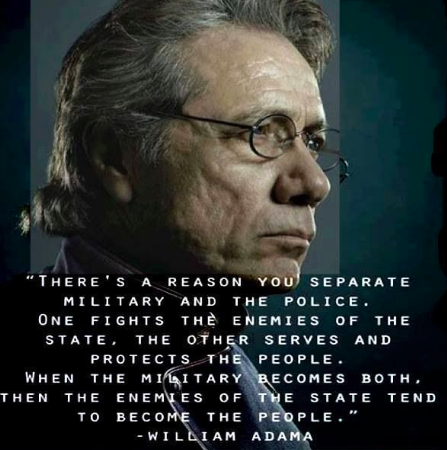
Adama, the source of that quote, was a battle-tested military officer who faced quite the unexpected challenge at the end of his long career. Along with Laura Roslin, he tried to avert the complete eradication of the human race. This was not easy. War, fanaticism, skin-of-the-teeth survival, the rise of trauma-bonded communities, the uses and misuses of power: Battlestar Galactica had it all.
It’s been missing from streaming for the past couple of years, but in the U.S., it's back as of May 1, on Paramount+ and Pluto TV. All four seasons, the TV movie The Plan and the miniseries will be on both services, and Paramount+ will also have the prequel Caprica. All in all, it's about damn time.
Speaking of time, if you’ve read my work over the years, this assertion probably won’t surprise you: Though it finished its run 17 years ago, Battlestar Galactica is still timely. Actually, this is a better way to put what I really think: Battlestar Galactica is the rare program that is more relevant than when it first hit the zeitgeist.
To be clear, it was very zeitgeist-y back in the day. Riffing on the much more family-friendly version that prolific producer Glen A. Larson created in 1978, the re-imagined Battlestar Galactica debuted in an America still reeling from the events of September 11, 2001. During BSG’s run, it explored the roots of violence, epic clashes of belief systems, and the very human desire for vengeance. There’s a whole chapter in my forthcoming BSG book about how scripted TV responded to 9/11 (tl; dr: not very well). BSG is the only TV drama made during the raw, dislocated years immediately after 9/11 that well and truly holds up. It's not that other programs didn't go there in the aughts; it's just that the shows that visited that storytelling terrain too often traded on stereotypes, ended up in cartoonish places, or sidestepped saying anything of value (or anything at all). They generally haven't aged well.
That said, one of the myths the book will dispel is that nu-BSG was commissioned because of 9/11. That’s not the case – its development was in motion long before that date. And part of the reason the drama holds up is because it was not interested in pursuing a set of copycat analogies regarding what the US experienced during the aughts. It certainly evoked the conflicts and dilemmas of that time — but of many other unsettled eras as well.
“I’m often asked about the politics of this show — who’s [George W.] Bush, who’s Al Qaeda, what are we saying about Iraq? The truth is, the show is about all of those things and about none of them,” executive producer and head writer Ronald D. Moore said when he and executive producer David Eick accepted a Peabody Award on behalf of the show in 2005. “We asked our audience to think about the world in which they live but to draw their own conclusions.”
Draw their own conclusions from a science fiction show? One that has its roots in a ‘70s original that featured a robot dog? (Sidebar: I will not hear a word spoken against Muffit, the metallic "daggit" in the OG BSG. I can think of no better way to describe growing up in the ‘70s other than to say, “There was a big-budget TV show with spaceships and an interplanetary casino with showgirls, and also there was a robot dog who was played by a monkey in a dog suit, and apparently, that monkey was a real pro.”)
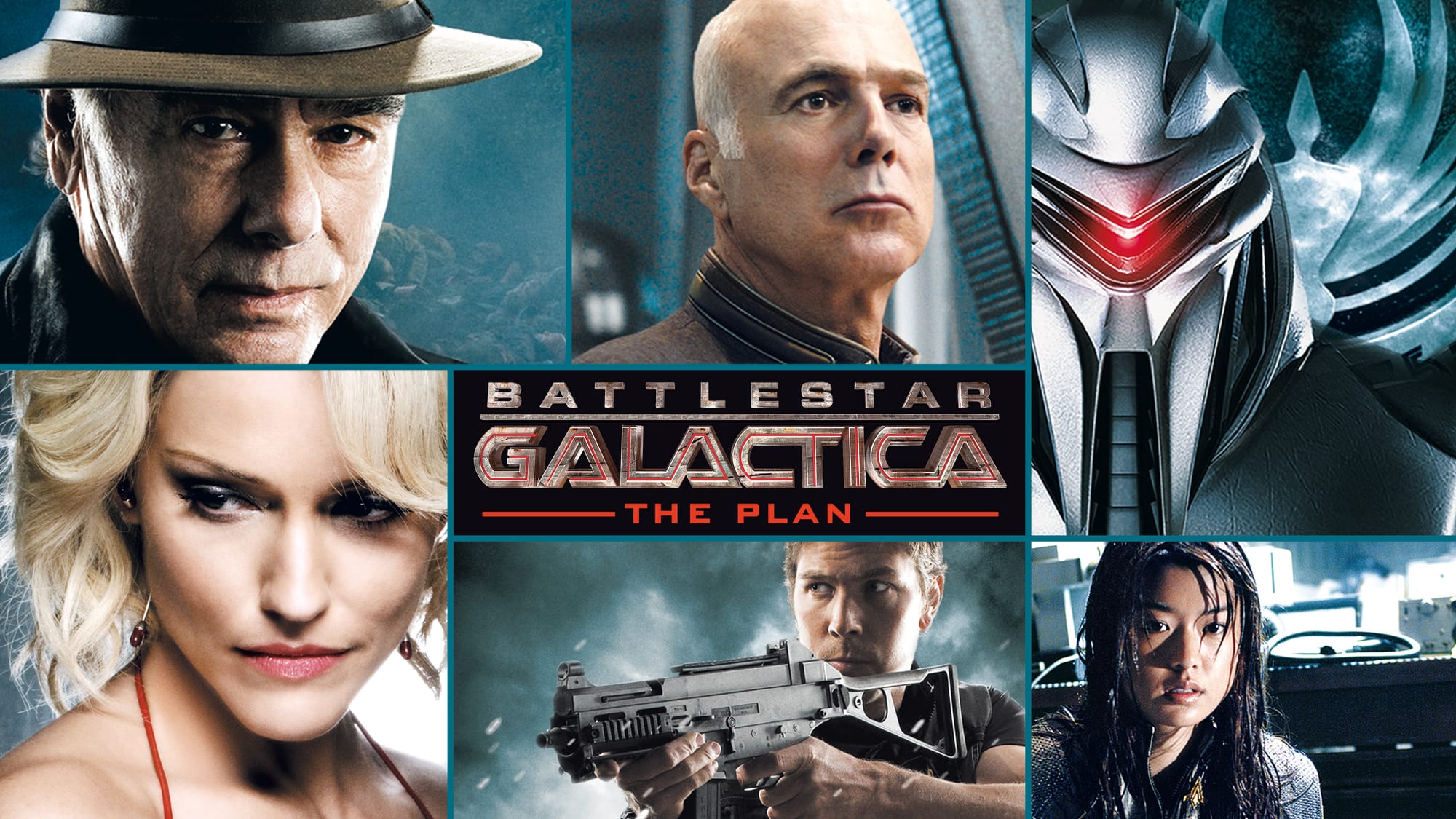
Anyway, if some of you hear “sci-fi” and think "bumpy-forehead aliens and caves made of painted styrofoam," think again. I love a lot of shows that have those things — one way to describe the updated BSG is to assert that it took the boldness and complexity of the best Trek series, Star Trek: Deep Space Nine, even further. It's wonderfully appropriate that at Paramount+, BSG will live alongside other Trek shows (three of which Moore worked on, in addition to co-writing two Trek films). Moore and several other BSG writers made their bones in the Trek world, but they eventually outgrew the limitations of the pre-aughts version of that franchise. And if they hadn't, we might not have the saga of the ragtag fleet.
In a lot of ways, BSG served as a bridge between eras – it had the long seasons of the mainstream TV machine of the time, and also the ambition and heft of the aughts' boldest offerings (many of which were on other cable networks, and most of which came along later in the decade). Individual episodes worked on their own, but it was often at its best in expertly paced two- and three-parters, and of course, its most important story threads were serialized. The tale of how that last element gave rise to the show's "And they have a plan" precap is a good one (also, I love the word "precap").
On more than one level, BSG was — appropriately enough — a hybrid. It never disowned its roots: Its makers clearly loved science fiction, and its space battles are second to none. But BSG was half sci-fi saga, half Prestige TV exemplar. It excised the kinds of outsized genre trappings that might have led some to take it less seriously, and it displayed the kind of ambitious, cinematic storytelling that placed BSG firmly within the realm of the best shows of the era. Add to all that an array of exceptional performances and character-driven writing, and BSG absolutely belongs in Hall of Fame conversation with The Wire, The Shield, Friday Night Lights, Breaking Bad, The Sopranos, and ER (among other all-timers).
As you may have figured out, I have a vested interest in making that case: I’m writing a book about the show. For it, I’ve spoken to Moore, Eick, director Michael Rymer, composer Bear McCreary, executives, department heads and an enormous array of cast members (and you can see that list of people below). I wish I had a pre-order link for you, but I won’t until next year. The point of this post is to say, if you’ve seen the show, you know watching Saul Tigh bark at underlings never gets old. There is no upper limit on the number of times I can watch "33," "The Hand of God," "Unfinished Business" or the first five episodes of Season 3.
And if you’ve never seen BSG, it's probably clear by now that I think it's one of the most transfixing stories ever told on the small screen. It's not that it never missed (every great show has some installments that don't work). But its phenomenal ambitions were largely realized, and every recent rewatch proves it had an almost uncanny ability to predict the era of lawlessness and unexpected bravery we’re experiencing right now. Behind the scenes, it was by far one of the most collaborative endeavors I've ever written about, and I really can't wait to share the stories I've heard on that front.
To whet your appetite for the book, here's an excerpt from the introductory chapter:
It’s impossible to write about this show without delving into the military and political maelstrom that, in many ways, gave birth to it. But to understand this show as primarily a political drama with some compelling people in it is to get its most notable stroke of brilliance backward. We cared about the choices that were made because we were invested in the people who made them. The show, so many times, made sure we couldn’t look away from what one person or group did to another — the Other. And it holds up not just because of the gripping nature of what was done, but because we were invested in who did it.
The moment I set eyes on Doc Cottle, I instantly knew this chain-smoker was cranky and pressed for time. But thanks to Donnelly Rhodes’ perfect performance, I also knew, from his very first moment on screen, that he’d do anything for the people in his care. At first he may have seemed like a recognizable type — irritable on the outside but secretly a caring softie — but he wasn’t only that. He was Doc Cottle — a specific person. When he sees Laura Roslin for the last time, well, I’m just thinking about that scene, and my eyes misted up.
If Doc Cottle, a character we only saw once in a while, was that immediately memorable, my gods, what an impression the rest of them made. Starbuck with her bravado and her hidden wounds. Boomer and Athena, siblings experiencing similar yet isolating anguish. At the end of the world, Laura Roslin finding a resolve she didn’t know she possessed. William Adama steering the fleet through every possible disaster while gaining — and losing — the love of his life. Lee, the eternally restless son, finally finding his place after much heartache. Gaeta, Helo, Anders, Tory and Dee, all so different from each other, all like the people you meet at work, at a barbecue, in line at the grocery store.
Regular people, specific in ways that made them unforgettable. Extraordinary people, flawed and tired and sometimes drunk. Confused seekers, gruff battle-axes, angelic visitors, dutiful public servants and impish devils. Those that appeared to be a compelling version of a type over time became much messier, more surprising and much harder to summarize. No matter what they did, the show and the performances made me understand the why of it. I came to care about this array of fictional people more than that of any other show, ever. As time went on, I missed them. Enough to write a book about how this creative team did these magic tricks.
It’s a little spooky how much of the show does actually map on to the past decade, and especially the last year. The Cylon race (which looks human) started out bent on the destruction of humanity: Long ago, misguided visionaries had created Cylons to do the humans’ dirty work, but the Cylons became sentient, looked at the conditions they were expected to tolerate, and forcefully rebelled. Because the show loved posing knotty questions, it didn’t take long for Battlestar Galactica to ask whether the Cylons — “toasters” to the most bigoted of their human rivals — were actually more human than the flesh-and-blood people they were trying to wipe out.
Meanwhile, within the ragtag fleet fleeing the Cylons, people had to figure out what rules, laws and norms they wanted to hang on to — and which could be tossed out an airlock, with the rationale that the quest for survival took precedence over every other consideration. Adama, Roslin and the increasingly weary survivors around them had to decide what freedom looked like, who had a say in what happened, and what kind of society they wanted, if and when they finally found a home.
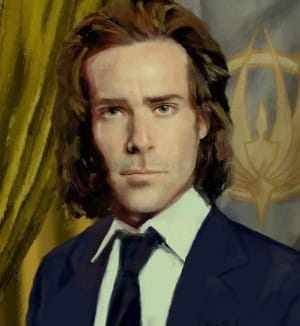
These kinds of pressures did unpredictable things to people. Some established cults, some engineered coups, some took refuge in religious prophecies or alcohol or brutality. At one point, a divisive presidential campaign featured bitter threats and a nearly successful attempt to steal the election. Eventually, a vain man with autocratic tendencies got his hands on real power, and one of his first acts was to put the head of the military in his place. “You don’t tell me what to do,” the puffed-up new president declared to Adama. “You work for me.”
Any of this ringing a bell?
Then again, it’s not too surprising that BSG has so many echoes of our own era, given that it’s a thoughtful examination of the workings of power and the consequences of hard choices. It's about people who thought they knew how the world worked, and then realized their assumptions had rested on a foundation of sand. One thing I find increasingly cathartic about the show is how immediate the consequences usually are, for good choices and bad choices alike. In our world, so many people – more every day, it seems – are protected from the outcomes they choose for others (and not themselves).
If you do rip through the show like that couple from Portlandia, just know there are many others pleasures to be found as well. Battlestar Galactica is not just a saga of danger, prophecy, battles and death. It is, at times, incredibly funny ("No more Mr. Nice Gaius!"). It has adventures and epic romances. And every time I revisit the show, it reminds me of how much potential — for love, for heroism, for self-discovery — every person has within them.
If you have heard the show can be dark, I get that. It can be. But there are also aspirational qualities to the show: As critic Melanie McFarland pointed out, in many respects, BSG displays "an idealized version of what a multicultural, egalitarian society can look like – if not here, then perhaps on some distant planet. Never are Starbuck’s capabilities, or Boomer’s or other female fighter pilots’, questioned because of their gender." As for the show's tone, I asked Moore (the subject of an interesting factoid in this recent post) about that aspect of BSG, and here's what he had to say:
“I never thought it was dark. It's a story happening in dark times for these people, clearly. And dark things did happen to them, terrible things. But I always thought it was important that there was hope in the show, and that they were striving for something better. They were trying to make a better life, and they were trying very hard to uphold things that were important to them and the ideals they held. I always thought it was a hopeful show.”
So say we all, etc.
The great publishing team at Mariner might (lovingly) yell at me if I don’t hype the book a bit, so: Sign up for my free newsletter for updates on the Battlestar Galactica tome, which is set to come out in 2028. Here are my other BSG posts, and I'll be posting much more Battlestar content in the months and years to come. That should include a lot of cool stuff from my extensive BSG archives (I wrote about the show a lot back in the day), as well as meaty outtakes from hundreds of hours of new interviews for the book. (I write about other stuff on this site too, just fyi.)
Finally, here is a roster of folks I’ve done fresh interviews with — most of them worked on BSG in some capacity, and others had insights I thought would be relevant (and they were!). This list is not complete, by the way – I'm drawing on past interviews in some cases, and I'll have chats with more people before I turn in the book later this year. But here is a partial list of sources for my Battlestar Galactica book (so far):
- Michael Angeli
- Jamie Bamber
- James Callis
- Dany Cooper
- Maril Davis
- David Eick
- Jane Espenson
- Tricia Helfer
- John Hodgman
- Richard Hudolin
- Alessandro Juliani
- Mary Robinette Kowal
- Lucy Lawless
- Paul Leonard
- Tom Lieber
- Cybel Martin
- Kandyse McClure
- Bear McCreary
- Mary McDonnell
- Stephen McNutt
- Ron Moore
- David Nevins
- Kerry Norton
- Edward James Olmos
- Grace Park
- Tahmoh Penikett
- Shawn Ryan
- Michael Rymer
- Anne Cofell Saunders
- Naren Shankar
- Rehka Sharma
- Todd Sharp
- Mark Sheppard
- Mark Stern
- Michael Taylor
- Michael Trucco
- Mark Verheiden
- Kate Vernon