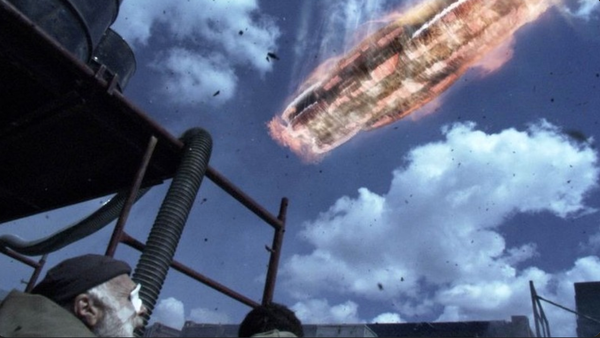
What do we do with the new Harry Potter show?
One thing is clear: We can’t magically erase the issues around the Sun City of television

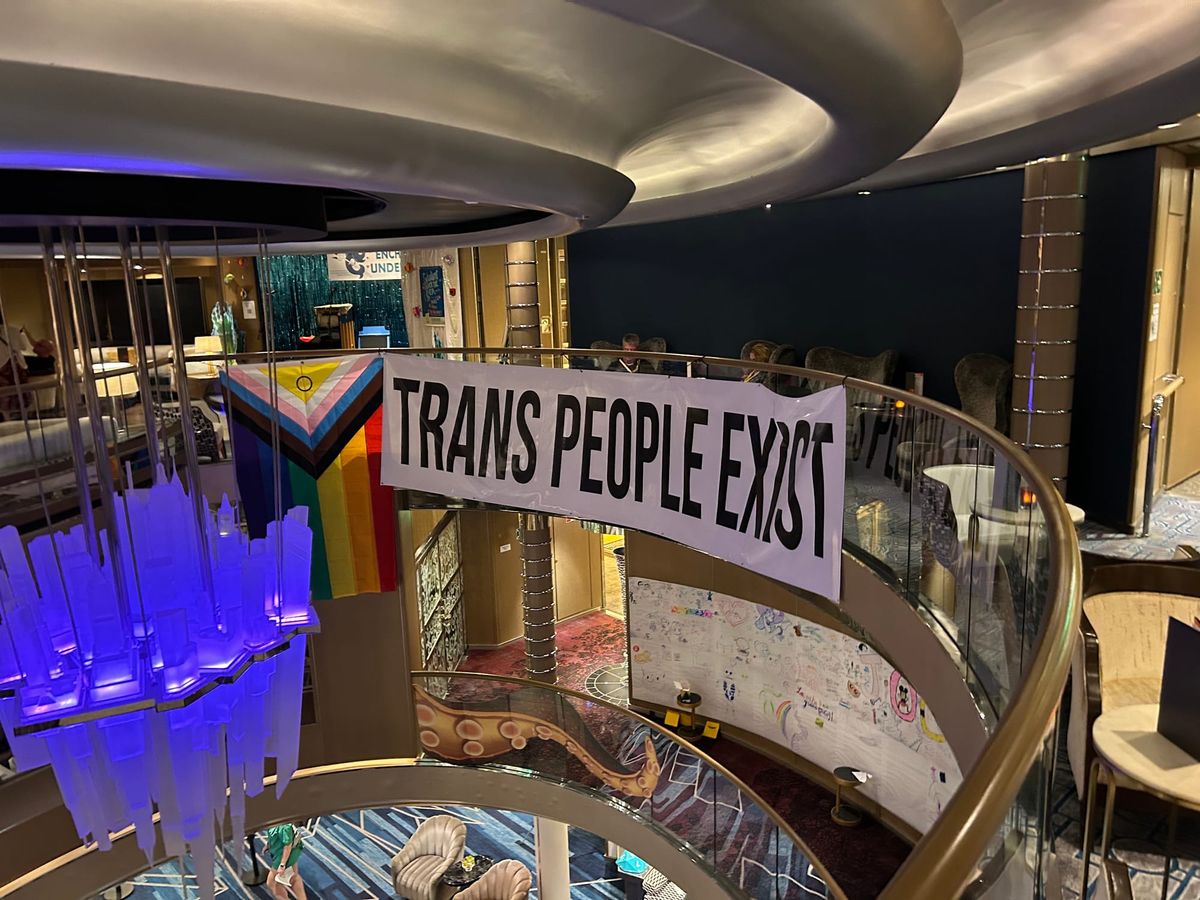
The normal cycle for the premiere of a major new program, especially one based on famous IP, is predictable. There’s also a familiar process to the rollout of an expensive project on HBO.
For big deals like these, the public usually sees a ton of reviews and features, plus a lot of daytime talk show appearances, an array of interviews, and many anecdotes shared from the couches of late-night programs, and so on.
But the usual rollout is not what will — or should — happen to the new Harry Potter drama. The corporate interests behind the $200 million Hogwarts saga will try to make its debut seem typical, but it’s far from that. It’s so beyond the norm that the best analogy is from four decades ago.
The new Harry Potter show is the Sun City of TV.
Sun City was a resort where a lot of musicians played gigs and presumably received sizable checks. I believe in musicians and artists of all kinds should get paid well for their work. But Sun City was located in South Africa, and a lot of artists did gigs at that resort in the ’80s, when apartheid was at its height — even after the United Nations imposed a cultural ban on the country.
Musicians trotted out any number of excuses: Artistic freedom; audiences weren’t only composed of white people; the artists deserved to earn a living; creative folks couldn’t get mired in the issues affecting each country they played; art builds bridges, etc.
Of all the excuses offered, the most tedious one was an artist saying they were “not political.” Please. Everything’s political. Ed Sheeran and a lot of other people nowadays want that not to be true, but it is true. If you use a rubric I once heard — “politics is how you treat people” — it’s normal to see a lot of life as political.
We all make choices that result in ourselves or others being treated well or treated badly, and some of our choices send messages to the world. The artists who played Sun City seemingly didn’t care about that, or perhaps wanted to treat members of the public like they were dumb. But people advocating for South Africa to face consequences on the world stage for the conduct of that nation’s rulers — that wasn’t a dumb idea.
Boycotts of all kinds, including arts boycotts, weren’t primarily what brought down apartheid, but they helped. Not playing songs at one venue was the very least a large array of wealthy performers could do. Some couldn’t clear that bar.
Back then, Queen trotted out that “not political” excuse when they played Sun City. Drummer Roger Taylor said years later, “We went with the best intentions, but I still think it was kind of a mistake.” Yes, kind of. Intent is not magic, and actions have consequences.
Cultural bans on whole countries were certainly unusual at that time, and the situation with the new Harry Potter show is similarly singular. I’ve been writing about TV since the early ’90s, and I personally don’t think there’s been anything quite as politically and culturally fraught as this drama’s debut. To watch that project get the full Hollywood rollout with all the trimmings — despite the actions of the person who created the world of Harry and his friends — would be strange. And it would send a message.
So that means we don’t just breeze by how bizarre it all is. We must engage with the facts. One key fact: J.K. Rowling is “creatively” involved in the new show, per the head of HBO. Let’s look at what else this extremely wealthy celebrity has been up to.
In 2025, according to a GLAAD piece on Rowling, the U.K. Supreme Court ruled “that a woman is someone born biologically female, excluding transgender people from the legal definition in a long-running dispute between a feminist group and the Scottish government. Rowling posted a photo of herself celebrating, smoking a cigar and holding a glass of wine on her yacht. Rowling was a backer of the group that sued the Scottish National Parliament.”
Per GLAAD, the previous year, Rowling argued “that transgender youth do not exist,” and also, in a different incident that GLAAD described, “misgendered U.K. transgender journalist India Willoughby and accused her of ‘cosplaying a misogynistic male fantasy of what a woman is’ in a social media thread that also compared transgender people using bathrooms that aligns with their gender identity with being permissive about pedophile teachers.”
In 2020, Rowling came up with the “most overt and lengthy discussion of her views, a 3,600-word manifesto published on her website responding to ‘the new trans activism,’” according to Vox. “The post is replete with myths and false transphobic stereotypes, particularly revolving around the narratives that gender and biology are inextricable and that trans women are dangerous.” In the piece, per Vox, Rowling stated that “the movement offers ‘cover to predators.’”
The GLAAD and Vox rundowns of the past decade of Rowling’s actions include many more incidents like these. But perhaps the most illuminating fact is that her name comes up when you click on the definition of “transphobia” in the Merriam-Webster dictionary, as one illustration of the current usage of the term.
As The Verge’s Charles Pulliam-Moore put it in a piece titled “There Is No Ethical Consumption of HBO’s Harry Potter Series,” “Rowling has made it abundantly clear that she thinks attacking transgender people via the legal system is a worthwhile cause and a good use of her vast personal fortune. And as much as Harry Potter fans might be excited to see what HBO has cooked up, there’s no way to watch this show without supporting Rowling’s bigotry and the structural violence she’s inflicting on a vulnerable minority.”
Bluntly, Harry Potter is not a normal franchise any more. Any flavor of endorsement — all the way from buying the books to commissioning a TV show; all the way from donning Hogwarts cosplay to an offering of glossy, conventional coverage of the HBO program — rewards someone whom I think has taken a series of actions that are unjust and reprehensible.
The fact is, writing about the new wizard show as if it’s a normal program is a political act. Penning a regular review or feature and just inserting a line or two about how J.K. Rowling has “caused controversy,” or about how her views have been “polarizing” — those are deflecting euphemisms. Those kinds of actions do not meet the moment. To quote South African cleric Bishop Desmond Tutu: “If you are neutral in situations of injustice, you have chosen the side of the oppressor.”
Why go into all this? My friend Tilly Bridges put very well: “If you think Harry Potter isn’t connected to JKR, she still profits off of every single book sold, every media adaptation, every brand licensing deal. I know it can be hard to drop things you love, but you know what? We do it because real human lives are more important.” They are. Ending apartheid was more important than playing a gig at one resort. Trans people are more important than any fictional endeavor that may contribute to real-world harm directed at them.
In her piece, Tilly quoted from various social media posts from myself and others about Rowling and the Harry Potter show, and this one will give you the overall flavor of my opinion. That particular reaction was inspired by something one of the actors said: “‘Those are not my beliefs.’ Oh really? See, the thing about beliefs is, unless you act on them, they are just words you say to make yourself feel better and you don’t truly believe those things at all. Hope that helps!”
My posts all come back to the same basic point: Actions speak louder than words. To see the roster of actors in the HBO show and working on the audiobook has been monumentally disappointing. These artists were asked to clear a bar inches from the floor, and they failed. “I used to be a fan of so many of you. I’m so devastated to discover my rights are less important to you than that paycheck,” Tilly wrote. Exactly.
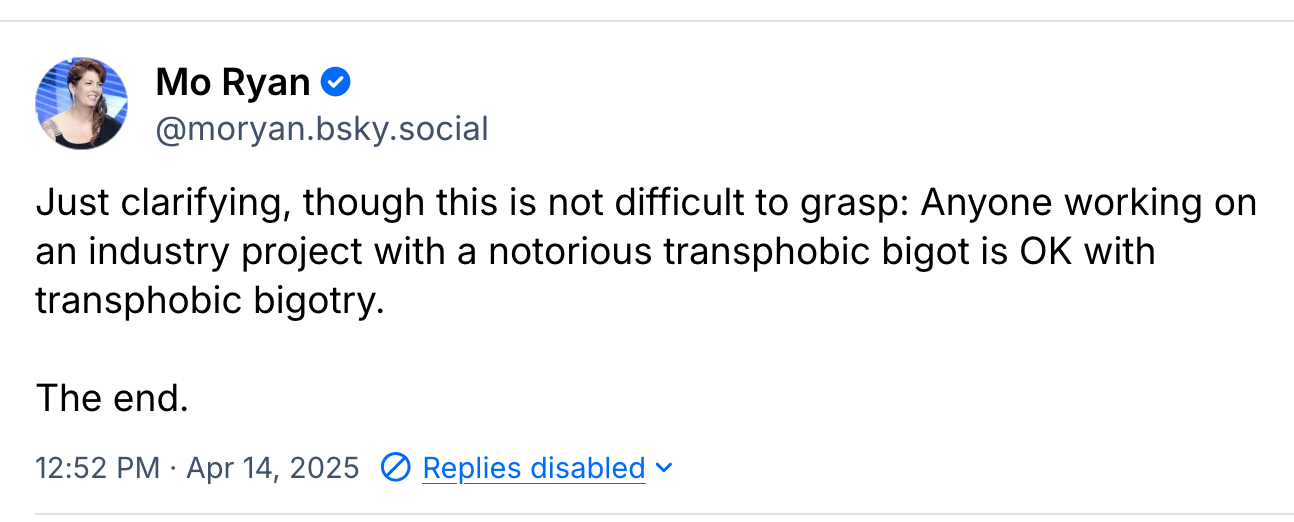
Speaking for myself, I don’t particularly care what industry professionals — actors, writers, directors and so on — say in interviews. As the rollout heats up, I hope we all remember that they have likely been coached by expensive P.R. Whatever the spin is, we are under no obligation to buy any of it.
Some are using social-justice terminology to justify their decision, but spare me the self-serving comments about tolerance: I have no tolerance for anyone who assists the cause of transphobic bigotry. We are not required to tolerate those who want to persecute a disfavored minority that is already under attack on multiple fronts. Many people actively campaigning against trans people want them not to exist and I have no plans to gently co-exist with outlook. I denounce it, now and always.
Aside from the kids in that show — and whew, I feel sorry for them — these actors and artists all had the option to say no to these gigs. Many in the creative community did, despite living through the worst Hollywood downturn I’ve ever seen. Some who chose to work on the show clearly aren’t enjoying the consequences of their actions, but it’s on them to reckon with their decisions. Intent is not magic, and actions have consequences.
A lot of my friends who are still hanging on to (disappearing) media jobs are going to have to figure out what to do about this show, and if they’re on staff somewhere, they may not have much choice in how their publication covers the HBO adaptation of Rowling’s most famous work. As someone whose main gig is writing books, I have more freedom, and that makes me lucky.
I will not tell anyone else what to do, when it comes to covering or just watching this show. It may be more useful to pose a series of questions for anyone thinking watching the show, writing about it, or assigning coverage of any kind:
- Back in 1985 — when Steven Van Zandt got together a group of musicians to record a protest song about playing Sun City — what would you have thought if you came across a Sun City review that primarily assessed the resort’s restaurants and amenities? Would you have thought such a piece was tone-deaf, at the very least?
- Do you think that watching or writing about this show in a routine or semi-routine way normalizes what the creator of that IP has publicly done with her vast power? If so, do you want to contribute to that process of normalization? If you do, what are your reasons for that?
- How will you feel if a critical mass of normal coverage or a healthy viewership encourage media conglomerates to make future deals with people who have used their power for harmful or dangerous goals? It already happens enough — do we want more of that?
- I’ve devoted my adult life to writing books and thousands of articles about TV. But given the context I’ve outlined around this program, I simply don’t care what the show is like — how good or bad it is. Is that what actually matters most to you in this moment? Why does the quality (or lack thereof) of a fictional drama matter more than the safety of trans people?
Food for thought, I hope. And I’ll give the last word to Assigned Media’s Aly Gibbs.
Aly is just one of many trans people who has had to reckon with the actions of Rowling, whose fantasy series meant a lot to Gibbs and her late mother. “J.K. Rowling’s work was, for much of my life, a bridge between my mother and I,” Gibbs wrote. “When she failed me—and she failed me many, many times throughout my life—we could still connect through our love of fantasy,” especially the Potter novels.
“Yet I have no problem disavowing everything associated with Rowling. If anything, it makes it easier: I resent her deeply for poisoning a thing that I anchored my love to. I hate her for the evil work she has done to harm my community. No, I will not be hate watching HBO’s Potter, and neither should you.”