Thoughts on a terrific new book about TV visionary Rod Serling

I watch television for characters, relationships, emotions, and pitched battles in outer space.
Okay, more than just those four things bring me pleasure, but those are some of the big ones. And not to get all “Old woman yells at clouds,” but one thing television has gotten less good at, in my humble opinion, is producing memorable characters.
A routine complaint around here is that I can’t remember character’s names. That is shorthand for, “I forgot what this person’s deal was, because it’s been so long since the show was on, and the previous season was too short to make this person’s deal familiar and compelling to me.” (Sidebar: This is the fault not of writers but of shortsighted executives and/or media CEOs. As it happens, I yelled about some of these problems when writing about TV-related book that came out in 2023.)
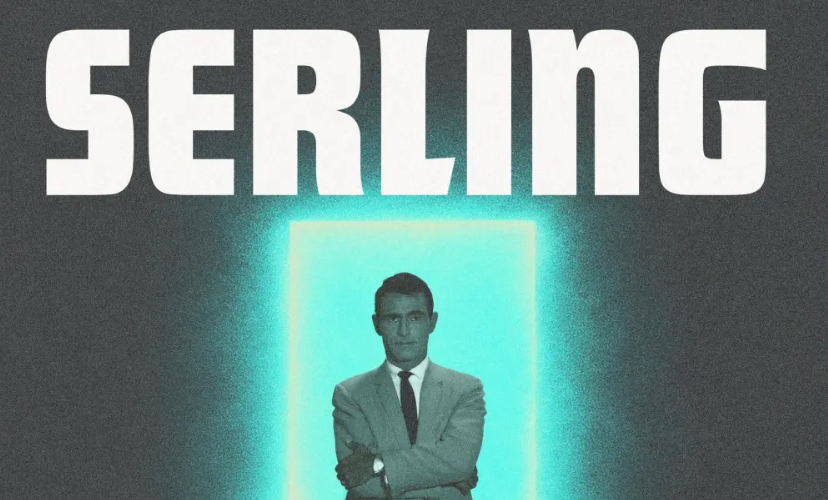
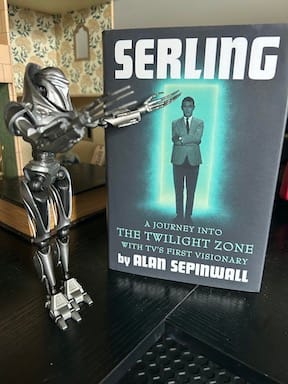
What a relief, then, to read a book that addresses that very problem. Turns out Rod Serling not only created any number of singular television characters, he himself was one of the most interesting characters in the history of the medium. Alan Sepinwall’s new book, Serling: A Journey Into the Twilight Zone with TV’s First Visionary, is out today, and as someone who loves TV, cares about its history, and is drawn to the lives of people who sacrifice a lot to create any kind of valuable art, I loved it.
Disclaimers: Alan and I have been friends for one million years, and I’ve written for his site, What's Alan Watching. We find reasons to talk and/or complain about something related to Star Trek almost every day. So yes, I’m biased, but I would not be writing this post if I thought Serling was mid. It’s not: It’s a fascinating story, well-researched and beautifully told. As someone who writes deeply reported non-fiction, I am impressed by how gracefully Alan integrated an enormous amount of research and a large array of interviews without overwhelming the reader. That is not easy, but Serling is an elegant synthesis of research, analysis, and opinion that is also fun to read.
The book does several things well. It tells Serling’s life story in a clear and thoughtful way, but it also examines his work in ways that gave me a new understanding of it. It drew parallels between his writing and what he went through before, during and after World War 2, the singular event of his life (and you can read much more about his combat experiences on Alan’s site).
The book provides a lot of useful context around Serling’s career, succinctly describes where television was in the ’50s and ’60s, and gets into what’s different (and what’s not) about that era in Hollywood's history. Some things are not all that different. I’m writing a book about Battlestar Galactica, which used the medium of science fiction to tell metaphorical stories about the world we live in now. Serling is great on the topic of how he swerved into sci-fi and horror storytelling to avoid censorship and the watering down of his work — and in doing so, he and his collaborators created works of lasting relevance (Alan wrote about all that for the New York Times recently).
Many hours of The Twilight Zone and Battlestar Galactica don’t feel dated because the characters and their dilemmas are portrayed well — and they are not necessarily tied to a particular time and place. They manage the difficult art of being specific and universal, and thus have aged remarkably well.
More generally, Serling filled in huge gaps in my knowledge around the man's pre- and post-TZ work. Once he broke through with his well-regarded teleplays for TV shows like Studio One and Playhouse 90, he and his collaborators kept running into the brick wall of TV executives and sponsors who wanted to put challenging work on the air — but not like that. Many elements of Serling’s work made them nervous.
This quote from Serling director Richard Goode could have gone directly into my BSG book, or any other piece about a filmmaker or TV creator trying to tell a story with social or political relevance: “It is a pleasure for a director to have an opportunity to work over an honest script for a change. TV unfortunately thrives on half truths. I’ve been doing my best to convince the proper people that the ratio of entertainment is in direct relation to truth, however, the purveyance of truth is not what they are trying to sell, and to do so is risky.”
On top of all that, the book has input from a who’s who of creative folks — Steven Spielberg, Jane Schoenbrun, Guillermo Del Toro, Jordan Peele and Vince Gilligan are just a few of the big names you’ll encounter.
Without question, one of the most enjoyable aspects of covering Hollywood is getting creative people to talk about artists whose work they admire. Despite its reputation as a haven for the self-absorbed (and those people exist), many artists become a little tongue-tied or bashful when talking about their own work and innovations, etc. They may be too close to their own craft to see it clearly, and at times, they understandably get tired of answering questions they’ve no doubt heard many times before.
But many of those same people come alive in a whole different way when asked about other artists, whether those people are colleagues or people whose work influenced them. Given that they have experience working in the same or similar trenches, these sources often point out and explain aspects of storytelling, performance or creativity that hadn’t occurred to me. In Serling, there’s a tremendous amount of insight into what he did, why it was innovative and effective, and why he has such a hammerlock on many noted creative people’s brains.
If that’s not appealing (weird, but ok!), you could just think of this book as a new season of Mad Men. Serling wore sharp suits, he was charismatic, he was curious, empathic, and caring; he was incredibly driven and, now and then, heedless of how his actions affected others. Rod Serling was such a mass of contradictions, all of which Alan limns with great care. This wildly successful man could never rest: Even at the height of his fame, Serling doubted himself every step of the way. He had success in TV and film, but also some notable failures. He was bad at making business decisions, and as a writer, had his share of blind spots. His family clearly loved him deeply, but as a person, he was clearly a lot — work-obsessed, hard on himself, constantly on set or focused on the next script, the next goal, the next battle to tell a story that mattered to him.
The book is a celebration, but the tragedy of Rod Serling — which you’ll understand far more after reading this book — is that he really and truly thought his work had no lasting value. Of course, he couldn’t know when he died (far too young) how widespread the syndication of The Twilight Zone would be. It sounds like the plot of a Twilight Zone episode, but at times, I wanted to re-animate Serling in order to thank him, and also to look him in the eye and say, “Why are you like this?” (A thing I say to myself regularly, so I’m not singling out ol’ Rod.)
So, here’s who Serling is for (and this is not a complete list, by any means):
- People who are curious about how the mind of an important artist worked, and how his thinking evolved throughout his career (and how he was and was not changed by success)
- People who like hearing from artists who are greatly influenced by a master in their field and what they learned from that person about storytelling possibilities
- How the demands of commercial TV wore down artists (Early TV Industry version)
- How the post-war generation processed their trauma through storytelling (and though Serling was not a film noir guy as such, it made me think about the many links between his work and that post-war filmmaking trend)
- The role of the public intellectual in fostering dialogue and social change
- People who are curious about the early days of television
- People who are interested in the role that frequently dismissed genres have on the culture, and how working in genre can both disguise and make timeless important themes and ideas
A final thought or two: One of the things I loved about the Twilight Zone was how kid-friendly it was. Nobody expected that — it was a show originally meant for grownups. Reruns were on all the time when I was growing up, and it wasn’t just that you could understand the metaphor pretty quickly—it just didn’t seem overwhelming or intimidating. You could sit down and watch one quickly, and simply enjoy the surface story. But over time, for a lot of young people, it woke up things in our brain that were deeper and more challenging.
But having grown up with TZ as a constant, and seeing Serling around as a pitchman too — he became, in the public consciousness, a bit of a caricature. He was the tightly-wound guy who smoked and used that distinctive voice to talk about strange or unsettling things. Parodies of Serling were part of my childhood too, and though most were affectionate, they tended to obscure his many accomplishments.
There are many valuable works and commentaries on the man and his work. I believe this new one to be essential. If you are able to read Serling, I hope you enjoy it as much as I did.