Star Trek at 60: An ode to an all-time classic Deep Space Nine episode
I nominated "Duet," a Star Trek: Deep Space Nine episode, for the TV canon as one of the all-time greats

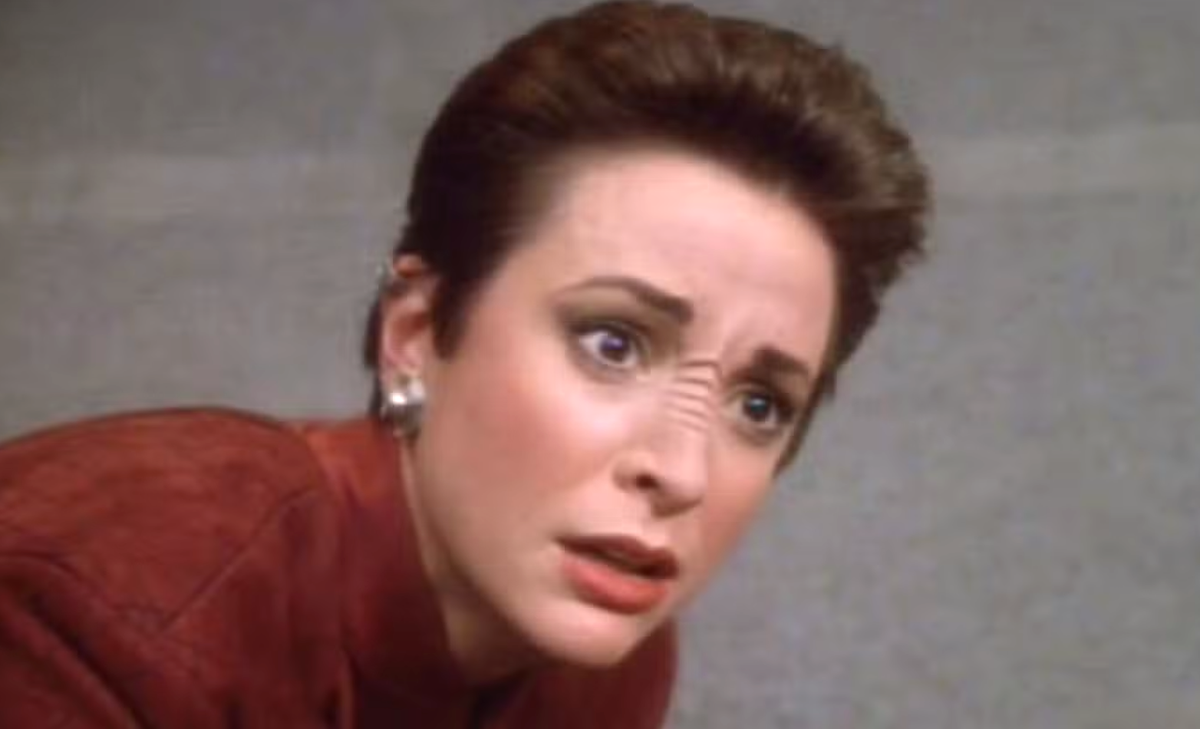
Hi there! I'm in the home stretch of finishing my book about Battlestar Galactica (and if you care to, sign up for my free newsletter to get updates on pre-order links!). In honor of the 60th anniversary of the debut of the Star Trek franchise, I offer something I wrote a decade ago. When I guested on the Extra Hot Great podcast in 2016, I nominated "Duet," a Star Trek: Deep Space Nine episode, for the TV canon (and the vote was in favor of canonizing the episode, I'm glad to say).
I write in the BSG book (due for publication in 2028) that the Syfy drama took everything DS9 did further, and the DS9 hour discussed below is an excellent preview of the kinds of themes, dynamics and character spotlights viewers would see play out later in the ragtag fleet. "Duet" is a tremendous showcase for the actors Nana Visitor and Harris Yulin (writing credits: story by Jeanne Carrigan-Fauci and Lisa Rich, teleplay by Trek all-timer Peter Alan Fields).
By the way, for something lighter on the Star Trek front, here's a 2022 fever-dream chart comparing DS9 to For All Mankind, a later work co-created by Star Trek: The Next Generation and ST: DS9 veteran Ron Moore.
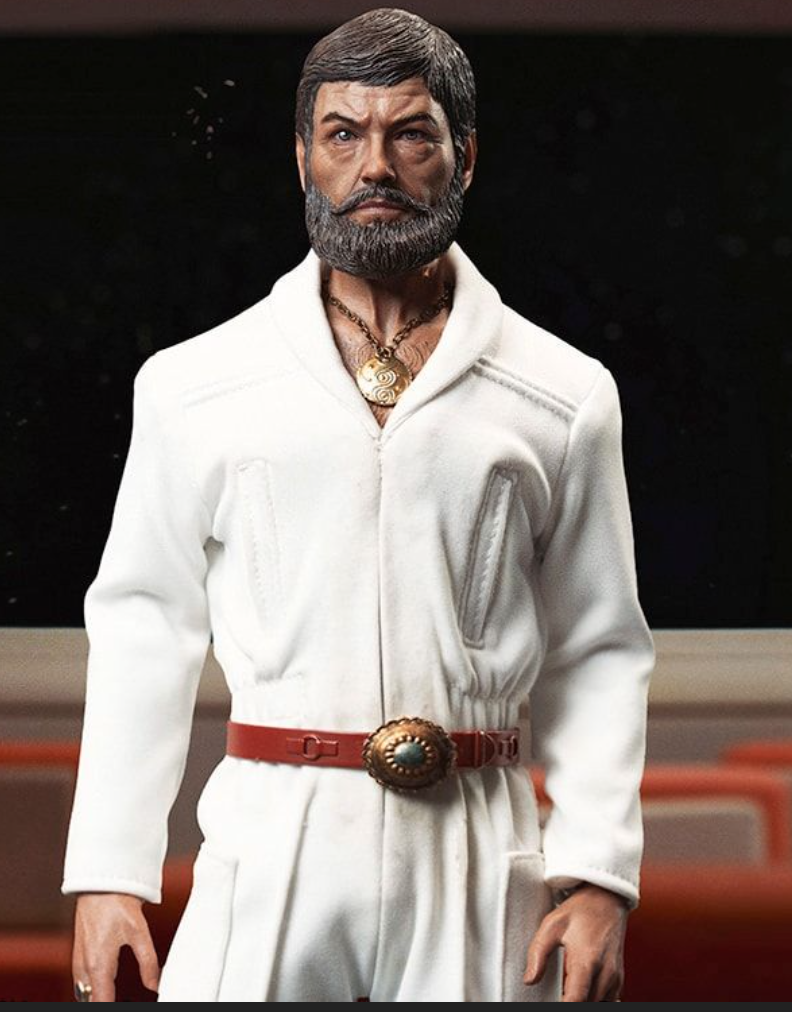
Enjoy – or rather, live long and prosper (warning: You may not prosper if you understandably empty your bank account for these beauties). All right, written in July 2016, here is my ode to the terrific two-hander "Duet."
There are a number of Deep Space Nine episodes I could have chosen for the canon, and I know there’s a good chance that some listeners out there will have others they’d have recommended instead, "In the Pale Moonlight" is indeed a great episode, and there are quite a few excellent standalone episodes and installments from the Dominion War arc that are worthy of consideration. But I’m going with "Duet," which aired at the end of the show’s first season.
But I chose "Duet" for an array of reasons, but in large part because to me it doesn’t just symbolize what this particular show could do at its best, or even what the Trek TV franchise can do when it’s firing on all cylinders. To me, "Duet" represents what mainstream hourlong dramas can do when they live up to their potential.
Star Trek wasn’t the only drama to ever engage in issues of morality and ethics, obviously. That’s been one of the foundational elements of scripted TV since it really emerged as an art form.
But these days, we tend to view these issues of right, wrong and murky grey areas in terms serialized character-driven arcs. Even in ensemble dramas, tv shows tend to focus on character journeys, and how individuals try to figure out what choices they should make in a confusing and conflicted world.
Trek wasn’t really like that, for the most part. The Jean-Luc Picard in the series finale of TNG, or in any of the movies, for that matter, is essentially the same person we met in the very first episode of that show. Over time, he doesn’t really change a lot. His journey is not the kind of meaty, serialized arc that we’ve come to take for granted in the more ambitious arenas of television these days.
One of the great things about Star Trek’s TV shows is that every week, it was a different morality play. That phrase makes it sound like the shows were preachy, and sometimes they could be. After watching an episode of a Trek series, I would sometimes turn to my husband and say, “I think we all learned something today,” and I’d only partly joking. Star Trek can, on occasion, be a little didactic. Sometimes more than a little bit.
But there’s a lot to like about how the franchise approached storytelling on a week to week basis. Yes, every Trek series had its rough spots, usually in the first few seasons. But each week, you got a complete story, and frequently that story would be focused on a small number of characters. They would encounter a problem and try to fix that problem, and often those challenges involved issues that people at home could relate to, despite the fact that none of us are in outer space or wearing tightly fitting polyester space onesies.
The Trek crews had good intentions, but it’s often said that the road to hell is paved with good intentions. While trying to retain their status as enlightened, educated and compassionate travelers, the Trek crews were constantly thrown into situations in which their assumptions and worldviews were thrown into doubt.
And that brings us to "Duet," which is a classic for a few reasons. For one thing, it’s an excellent example of a bottle episode, which is a Star Trek institution, of course. Referring to my ST: DS9 official companion — which is a book we all own, am I right? — writer Peter Allen Fields noted that, as happens at the end of most seasons, the budget for DS9 had mostly run out by the time the writers sat down to figure out what to do with this particular installment. So "Duet" had to do what a bottle episode does — use existing sets and have people basically sit around and talk to each other.
"Duet" does this incredibly well, and shows us why truly terrific bottle episodes are one of the best things about TV in general, but the Trek franchise in particular. "Duet" loads its premise with a lot dramatic possibilities, right out of the gate. You could sit down and watch this episode without knowing anything about DS9, as long as you know that the proud, warlike Cardassian race recently ended their occupation of the planet Bajor, and Kira Nerys, a former member of the Bajoran resistance, now works on DS9 as a liaison officer.
An overview of the story: A man turns up on the station, and very quickly, the crew figures out that he’s not what he seems to be. What transpires next is a tense series of interrogations, as Kira and the Cardassian, Marritza, spar about not only who he is but what he may have done while part of the occupying army on her home planet.
In any event, Fields took an idea by writers Jeanne Carrigan-Fauci and Lisa Rich, and turned it into the kind of morality play that became DS9’s particular hallmark. There was an ambiguity embedded into this situation that informed the best of the show’s episodes and arcs. At no point is Marritza or Kira the bad guy, necessarily. She continues to be furious about what the Cardassians did to her people, but it’s unclear whether Marritza is a simple file clerk who passively participated in genocide, or one of the prime architects of the bloody oppression of her people.
She doesn’t know how to feel about him, because his story keeps changing, but Fields and director James L. Conway handle this instability like the experienced pros they are. Conway’s camera spends a lot of time in close-up, focusing on the tight quarters in which these characters find themselves. The episode could have been titled “Crucible,” because it’s packed with a lot of well calibrated tension that eventually explodes, but only when the story calls for it.
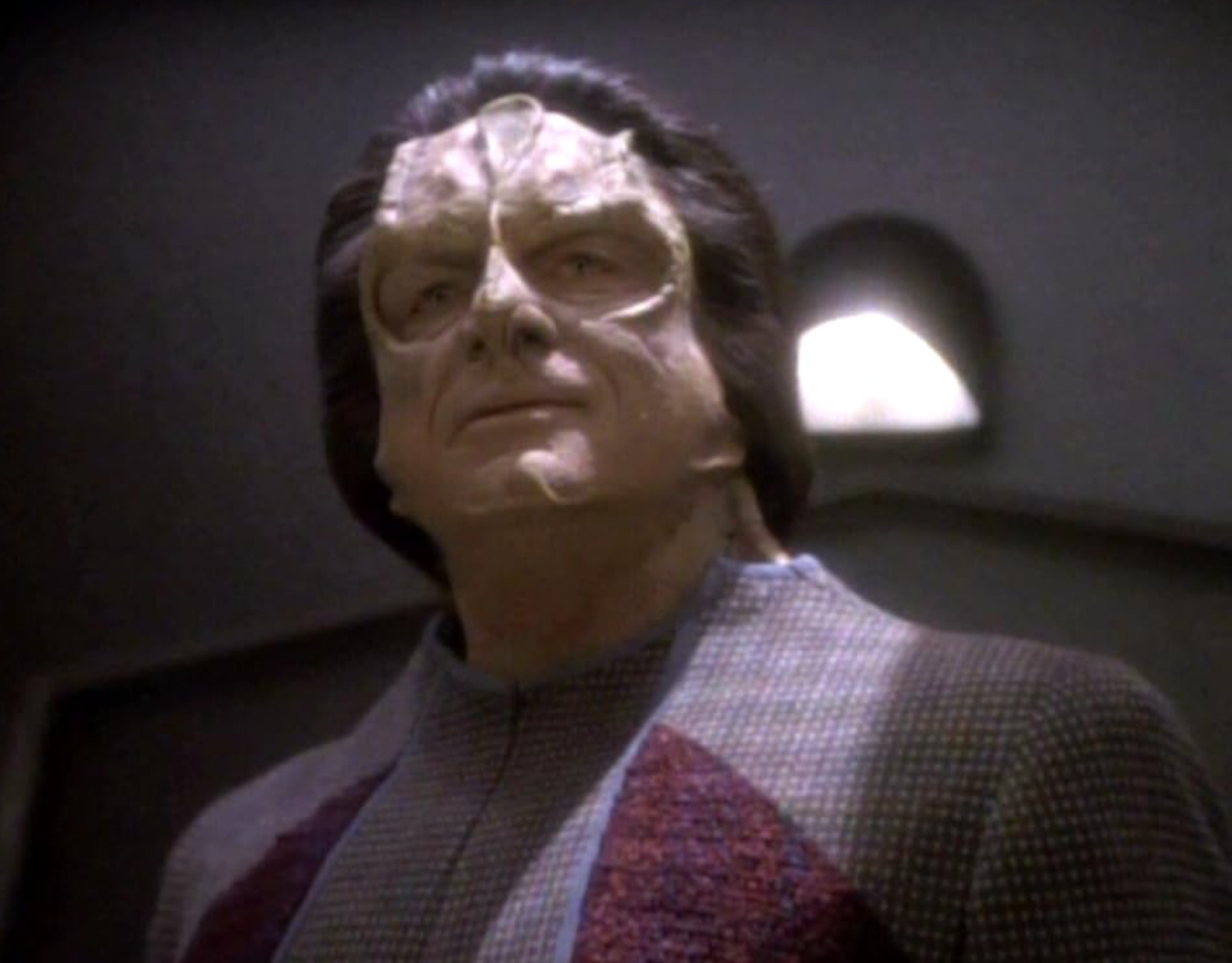
Speaking of old-school pros, Marritza is played by the great Harris Yulin, and if you get a chance, check out his resume on IMDb. He’s been in everything, and you’ve seen him a dozen times, I have no doubt; he’s the kind of character actor who makes every episode of TV he’s in instantly better. Marritza has to embody a lot of different things in a short time span, and Yulin handles the transitions incredibly well. As Kira, Nana Visitor is impassioned and even enraged at times, neither she nor Yulin go over the top. And I don’t want to give too much away, so that you watch not just the episode but the whole series, if you can, but they do some of their best work in the episode’s concluding scenes.
All in all, everyone involved in this episode does a fine job of focusing on one key question, and how that question plays out both personally and politically: The Cardassian occupation is over, but is it, really?
The Cardassian occupation, the Dominion War, the Jem’Hadar, the role of religion and prophecy, the clashing priorities of the Federation and the other players in the game — these are the things that set DS9 apart, and made it such a fertile playground for writers who really wanted to dig into issues of morality but give them a great deal more ambiguity than you typically saw in some of the other Trek series.
It’s not that the other Trek series didn’t have episodes with dark storylines or difficult outcomes. But these kind of difficult, sometimes serialized conflicts were the bread and butter of DS9, which was set on a station that stayed in one place — but it showcased an array of characters who took adventurous and unexpected character journeys as they grew and evolved over the seven seasons of the show’s run.
"Duet" aired in DS9’s debut season, and as I noted, Trek series often struggled in their first seasons, but this episode broke that mold. It was polished yet complicated, satisfying yet it did not offer a neat, tidy moral at the end of the hour. There are a few scenes, especially toward the end, that I wish had been fleshed out a little further, but overall, it’s an episode that symbolizes how smart and probing DS9 could be. You look at this episode and you’re not surprised that several mainstays of the DS9 writers room, including Ron Moore, went on to create a classic Golden Age drama that took many of these ideas even further in Battlestar Galactica.
"Duet" does something that BSG went on to do really well, something I came to call “The Flip” during the later Syfy show’s run. You’d set out thinking one person in a particular situation was right, but then the story would flip things around and make you see the scenario from another perspective. You could never feel superior to the characters on the screen because you ended up empathizing with their doubt and confusion — moral, personal, political and otherwise.
I could have nominated "Duet" because, like some very good shows — Homicide, The Shield, Law & Order, The Night Of, to name just a few — it has some A-plus interrogation scenes. I could have nominated it because it gives us a strong indication of what DS9 would grow into, i.e., Star Trek’s most thorny drama, the one in which the characters grew and changed in surprising ways and ended up, at the end of seven years, in very different places from where they started. I could nominated it because it takes what Trek dramas at their best do well — create accessible standalone episodes with depth and thoughtful insight — and takes that model a few notches higher, showcasing a lot of what worked best about pre-Golden Age TV.
But the main reason I’m putting forth this episode for the canon is because it’s simply an engrossing hour of television, one that keeps you guessing even as you wonder what you would have done, had a war criminal showed up at your workplace. Thanks for listening to why I think "Duet" belongs in the Canon, and live long and prosper.
This has nothing to do with DS9 or "Duet," but on this sacred day, I also want to pay tribute to the greatest (and hottest) action figure that has ever existed: Space Orgy Disco Bones from TMP, complete with jumpsuit and medallion! Risian mind-altering substances sold separately!